

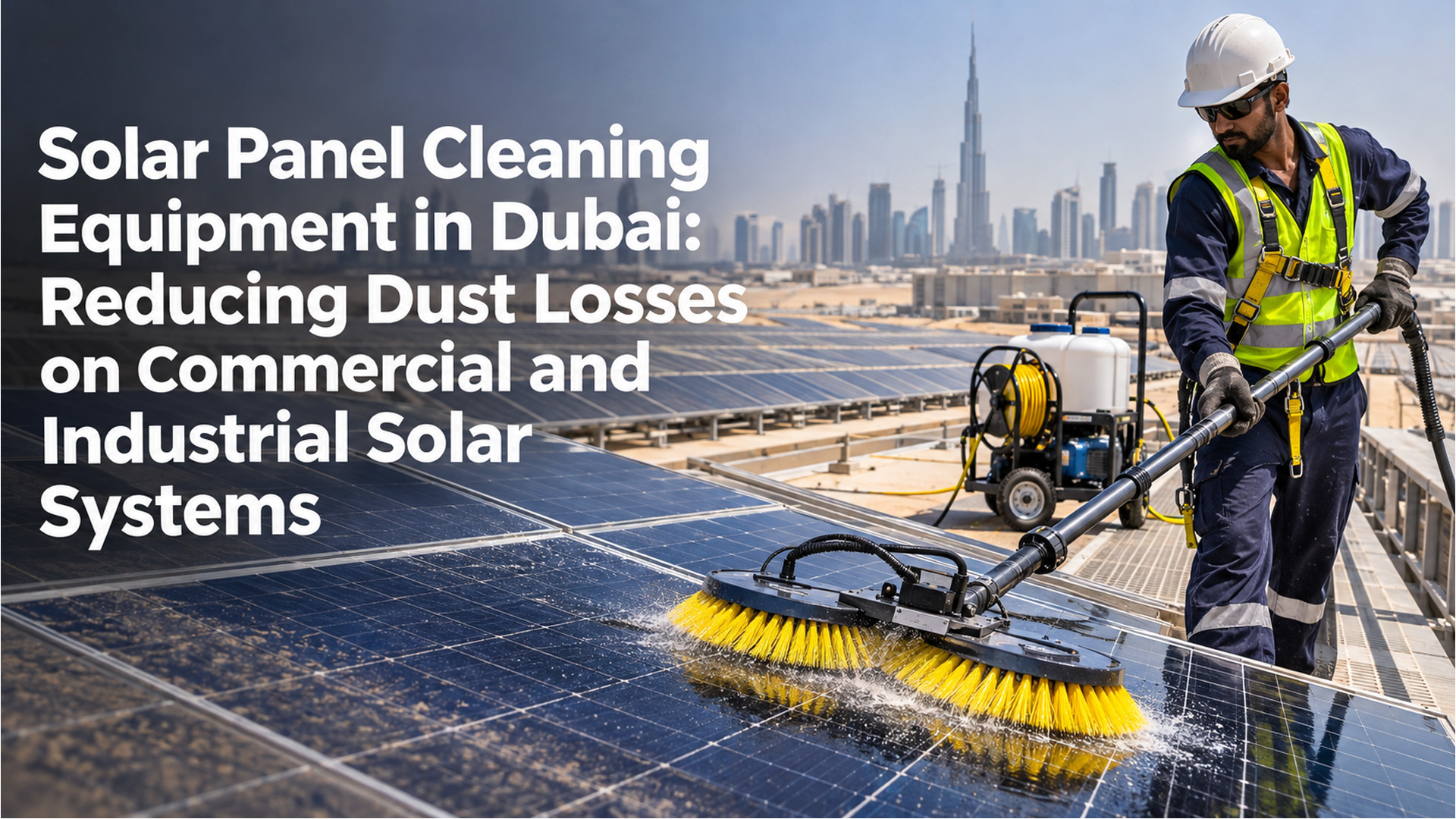
🧽 In a dusty climate, the cleanest panels are the most productive ones. The right equipment and routine protect output without damaging the modules.
Dust is part of daily life in Dubai, and solar panels collect it quickly. A thin layer blocks sunlight, sandstorms leave heavier deposits, and humidity can turn dust into a stubborn film. For commercial and industrial owners who invested in solar to reduce electricity costs, choosing suitable solar panel cleaning equipment in Dubai is one of the simplest ways to protect that return.
Cleaning sounds simple, but the wrong method can scratch glass, leave mineral spots, void module warranties or put workers at risk on rooftops. The right approach balances cleaning frequency, water use, labor, safety and the scale of the installation.
Direct answer: Solar panel cleaning equipment ranges from manual soft brushes and water-fed poles to semi-automatic brush machines and robotic dry-cleaning systems. The right choice depends on array size and layout, access, water availability and quality, dust conditions, labor cost and the module manufacturer’s cleaning guidance. Use soft, non-abrasive tools and low-mineral water, avoid high-pressure jets, and set cleaning frequency from performance monitoring rather than a fixed calendar.
Why Soiling Matters in the UAE
Soiling reduces the light reaching solar cells and therefore the energy produced. In arid, dusty regions, losses can build up quickly between cleanings, and they rise further after dust storms. Bird droppings and localized dirt can also create hot spots on modules.
Because output loss translates directly into lost savings, many owners compare the cost of cleaning against the value of recovered generation. Monitoring data from the inverter or a monitoring platform is the most reliable way to judge when cleaning is worthwhile.
Types of Solar Panel Cleaning Equipment
| Equipment type | How it works | Best fit |
| Manual soft brushes and squeegees | Hand cleaning with water or dry brushing | Small rooftops with safe access |
| Water-fed pole systems | Telescopic poles deliver purified water through soft brushes | Medium rooftops, carports, ground arrays with access from the edge |
| Semi-automatic brush machines | Motorized rotating brushes moved along rows | Larger commercial and industrial arrays |
| Robotic cleaning systems | Robots travel along panel rows, often dry cleaning | Large arrays, water-scarce sites, frequent cleaning needs |
| Vehicle-mounted brush systems | Brush arms mounted on tractors or utility vehicles | Large ground-mounted solar farms |
Each option involves a trade-off between upfront cost, labor, water use and suitability for the site layout.
Water Quality Matters
Washing with hard or mineral-rich water can leave spots and residue that reduce light transmission. Many cleaning systems therefore use purified, low-mineral water, which dries without spotting. Water-fed pole systems commonly include filtration or deionization stages for this reason, and suitable water purification equipment can supply larger cleaning operations.
Key insight: Cleaning with the wrong water can leave panels looking clean while a fine mineral film quietly reduces output. Low-mineral water is as important as the brush.
Protecting the Modules
Panel glass and coatings can be damaged by abrasive tools or harsh chemicals. Good practice includes:
- Following the module manufacturer’s cleaning instructions to protect warranties
- Using soft, non-abrasive brushes designed for solar glass
- Avoiding high-pressure jets that can damage seals and frames
- Avoiding detergents unless approved by the manufacturer
- Cleaning in early morning or late afternoon to avoid thermal shock on hot glass
- Never walking on panels
Safety on Rooftops and Carports
Many commercial arrays sit on rooftops or elevated structures. Cleaning plans should include fall protection, safe access routes, electrical safety awareness and trained staff. Water-fed poles and robotic systems can reduce the time workers spend at the roof edge. On solar carports, cleaning access should be planned during design.
Choosing Cleaning Frequency
There is no universal schedule. Frequency depends on local dust levels, nearby construction or industrial activity, panel tilt, rainfall and the value of lost generation. Practical approaches include:
- Comparing output against expected generation or a reference clean panel
- Cleaning after dust storms
- Adjusting frequency seasonally
- Comparing cleaning cost against recovered energy value
Key insight: Let the monitoring data decide. A cleaning routine based on measured losses avoids both wasted effort and avoidable generation loss.
Matching Equipment to Array Size
Small commercial rooftops
Manual brushes or water-fed poles with purified water are usually sufficient, provided safe access exists.
Medium commercial and industrial rooftops
Water-fed pole systems or semi-automatic brush machines reduce labor and improve consistency.
Large arrays and ground-mounted plants
Robotic or vehicle-mounted systems become more economical as array size and cleaning frequency increase, and dry-cleaning robots reduce water demand.
Integrating Cleaning Into Solar Operations
Cleaning is one part of a wider maintenance plan that includes inspections, inverter checks, electrical testing and performance reviews. Owners planning new arrays should design access for cleaning from the start. Our guide to solar energy systems installation in Dubai covers how planning at the design stage affects long-term operation, and our overview of commercial solar energy systems explains the wider business case.
Building a Cleaning Program for Commercial Sites
For facility managers responsible for several buildings or a large industrial rooftop, a written cleaning program brings consistency. It should define:
- Responsibilities: in-house team, cleaning contractor or solar maintenance provider
- Methods by area: which equipment is used on each roof, carport or ground array
- Water supply: source, purification method and quality checks
- Safety procedures: access routes, fall protection, permits and electrical precautions
- Triggers: scheduled cleans, post-dust-storm cleans and performance-based cleans
- Records: dates, areas cleaned and output before and after cleaning
Over time, these records show which areas soil fastest and whether the cleaning budget is being spent where it recovers the most energy. They also provide evidence that cleaning follows manufacturer guidance, which can help if a warranty question arises.
Sites with both solar panels and large glass facades can often share equipment, water purification units and trained staff between the two tasks, improving the return on the investment.
Common Mistakes When Cleaning Solar Panels
- Using hard water that leaves mineral deposits
- Scrubbing with abrasive pads or stiff brushes
- Using pressure washers at close range
- Cleaning at midday on hot glass
- Walking on panels or working without fall protection
- Following a fixed schedule without checking performance
How RBC Engineering Supports Solar Cleaning Needs
RBC Engineering supplies building cleaning equipment and solar energy systems for commercial and industrial facilities in Dubai and the UAE. For a solar cleaning equipment enquiry, share the array size and layout, mounting type, access arrangements, water availability, current cleaning method and any performance data. Facility managers looking at wider maintenance tools can also see our guide to facility maintenance equipment in Dubai and our article on building cleaning equipment for commercial and industrial facilities.
Frequently Asked Questions
How often should solar panels be cleaned in Dubai?
It depends on dust conditions, location and the value of lost generation. Use performance monitoring to set frequency, and clean after significant dust storms.
Can I use a pressure washer on solar panels?
High-pressure jets can damage seals and coatings and may affect warranties. Low-pressure water with soft brushes is generally recommended.
What type of water is best for cleaning panels?
Low-mineral, purified water helps prevent spotting and residue. Many water-fed pole systems include filtration or deionization.
Are robotic solar panel cleaners worth it?
They can be for large arrays with frequent cleaning needs, especially where water is limited or labor is costly. Smaller rooftops often suit manual or pole systems.
Does cleaning affect module warranties?
It can if methods conflict with the manufacturer’s instructions. Check the cleaning guidance for your modules.
Is dry cleaning effective?
Dry brushing or robotic dry cleaning can remove loose dust effectively. Sticky deposits or bird droppings may still need water.
Protect the Output You Paid For
The right solar panel cleaning system keeps panels productive, protects the glass and keeps workers safe. Match the equipment to the array, use the right water, follow the manufacturer’s guidance and let performance data guide the routine.
Looking for solar panel cleaning equipment for a commercial or industrial site in Dubai? Call RBC Engineering on +971 55 502 2471, email info@rbcengineering.ae, or share your array details to discuss suitable options.