

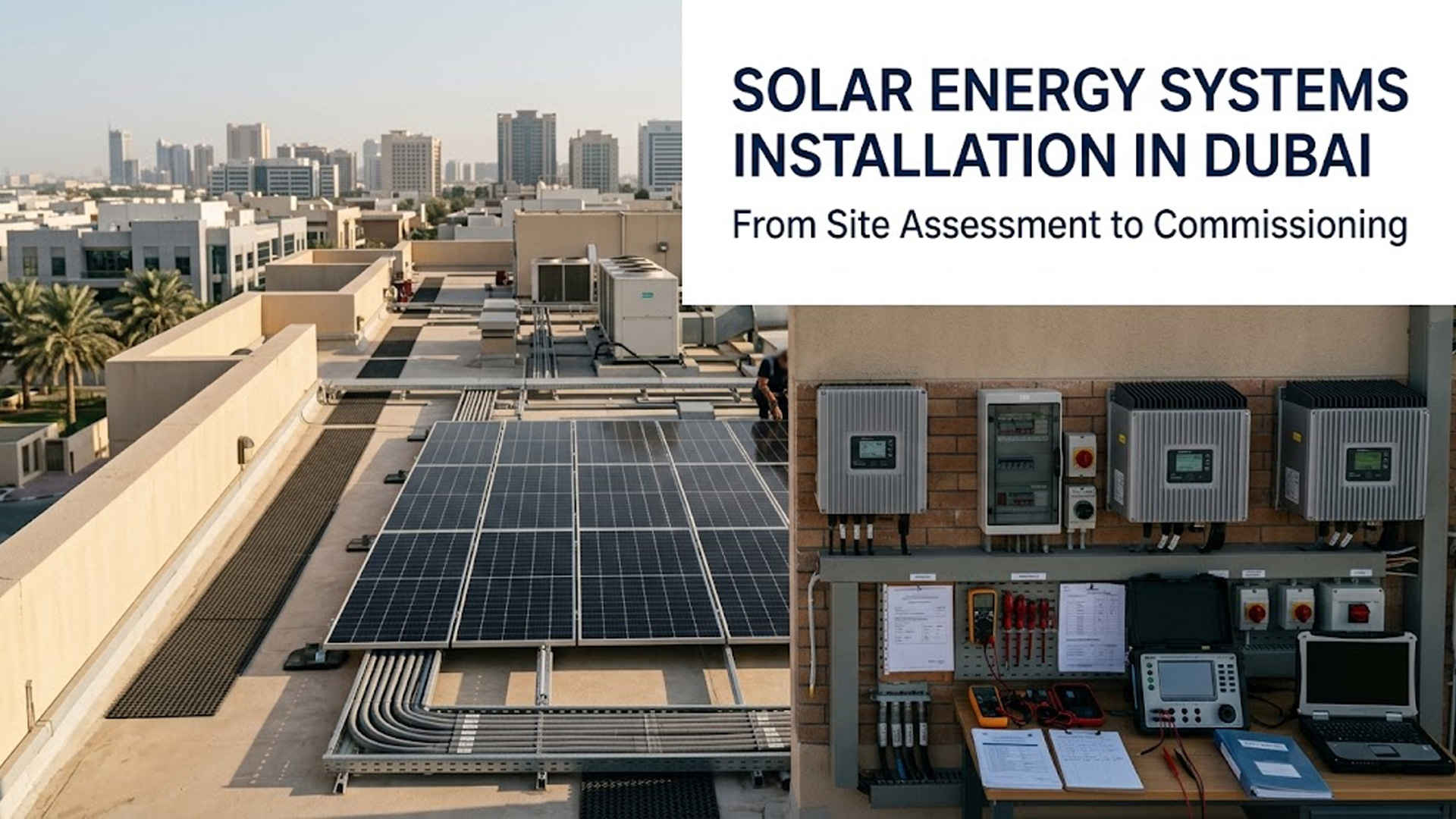
A reliable solar installation is decided during design, electrical coordination and approval planning long before the first panel is mounted.
A successful solar energy systems installation in Dubai begins with understanding the property, electricity consumption and electrical infrastructure. Moving directly from a roof measurement to a panel quotation can overlook load patterns, structural constraints, cable routes, electrical protection, equipment access and grid-connection responsibilities.
The installation process should therefore connect three disciplines: energy planning, physical site design and electrical integration.
Direct answer: Solar installation in Dubai should normally progress through energy assessment, site survey, system design, equipment selection, applicable utility and authority submissions, structural and electrical coordination, installation, testing, commissioning and handover. The exact process depends on whether the system is grid-tied, hybrid or off-grid and on the specific property conditions.
Step 1: Understand the Electricity Profile
The installer needs more than the building’s total annual consumption.
Useful information includes:
- Monthly electricity use
- Daytime demand
- Peak demand
- Operating hours
- Major equipment loads
- Seasonal variations
- Future expansion
- Potential EV charging
This information helps determine how much solar generation the site can use effectively.
Step 2: Complete a Physical Site Survey
The site survey establishes how much of the available roof, carport or ground area can genuinely be used.
The assessment should consider:
- Orientation
- Shading
- Roof condition
- Structural arrangement
- Parapets
- Mechanical equipment
- Water tanks
- Existing services
- Maintenance pathways
- Safe equipment access
The gross roof area is rarely the same as the usable PV area.
Step 3: Select the Correct Solar Architecture
The installation approach changes according to system type.
| System | Main Installation Consideration | Typical Objective |
| Grid-tied | Grid interface, protection and connection requirements | Offset suitable on-site electricity demand |
| Hybrid | Grid interface plus battery, inverter and control integration | Combine solar production with defined storage functionality |
| Off-grid | Generation, battery autonomy and standalone power balance | Supply loads without normal grid dependence |
RBC Engineering’s main solar energy systems service provides the wider comparison between these architectures.
Step 4: Develop the Solar Layout
The PV layout should balance installed capacity, access, shading and structural practicality.
Good layout planning considers:
- Module dimensions
- Required spacing
- Maintenance access
- Shading between rows where relevant
- Roof obstructions
- Drainage
- Walkways
- Cable routes
- Mounting arrangement
Trying to maximise panel quantity without protecting access can create long-term maintenance problems.
Step 5: Review Structural Conditions
The mounting system transfers loads to the roof or supporting structure. Existing construction therefore needs to be considered before installation.
Relevant factors can include:
- Roof construction
- Existing structural capacity
- Mounting loads
- Wind exposure
- Existing penetrations
- Waterproofing
- Equipment access
The required structural review depends on the building and mounting method.
Step 6: Coordinate Electrical Design
The solar array becomes part of the building’s electrical infrastructure.
Electrical coordination may involve:
- PV string configuration
- DC cabling
- Inverter location
- AC cabling
- Distribution-board connection
- Isolation
- Protection equipment
- Earthing
- Metering
- Monitoring
The design should also consider existing loads and the capacity of the electrical system at the proposed point of connection.
Step 7: Select Solar Panels and Inverters
Equipment should be selected for the project rather than from marketing claims alone.
Evaluation can include:
- Rated capacity
- Electrical characteristics
- Temperature performance
- Physical dimensions
- Module compatibility
- Inverter input range
- Monitoring capabilities
- Environmental suitability
- Applicable equipment requirements
- Manufacturer documentation
Where a Dubai grid-connected project is proposed, the project team should confirm current utility equipment and connection requirements before procurement.
Step 8: Complete the Required Approval Process
Grid-connected solar installations in Dubai need to be coordinated with the applicable utility and project approval requirements.
The responsible project team should confirm:
- Who is authorised to make the required submission
- Which drawings and technical documents are required
- Equipment eligibility
- Electrical-design requirements
- Inspection requirements
- Metering and connection steps
Approval planning should happen during design rather than after the equipment has arrived on site.
Step 9: Install the Mounting System and PV Modules
Physical installation must protect both the solar equipment and the building.
Workmanship considerations include:
- Correct mounting alignment
- Suitable fixing methods
- Waterproofing protection
- Module clamping
- Cable support
- Connector protection
- Equipment labelling
- Safe access
Step 10: Install Inverters and Electrical Equipment
Inverter placement can affect reliability and maintainability.
The location should consider:
- Environmental exposure
- Ventilation
- Clearances
- Maintenance access
- DC cable lengths
- AC cable route
- Emergency isolation
- Monitoring connectivity
Step 11: Testing and Commissioning
Installation is not complete when the last panel is connected.
Commissioning should confirm that the mechanical, electrical and monitoring systems operate as intended.
Activities may include:
- Visual inspection
- Electrical checks
- Protection verification
- System energisation
- Inverter commissioning
- Monitoring setup
- Functional testing
- Initial production review
Applicable inspection and connection requirements should also be completed for grid-connected projects.
Commercial Solar Installation
Commercial facilities introduce additional coordination challenges because installation work must often occur around active building operations.
Projects involving commercial solar energy systems should consider:
- Operational access
- Working hours
- Electrical shutdown windows
- Tenant activities
- Roof warranties
- Existing mechanical services
- Health and safety coordination
Grid-Tied Solar Installation
A grid-tied solar installation needs particular attention to protection, metering, inverter settings and electrical connection.
The installation team should follow the approved project design and applicable utility requirements rather than modifying the connection arrangement informally on site.
Hybrid Solar Installation
Hybrid solar installation introduces battery storage, additional control logic and selected backup-load planning.
Battery installation should consider:
- Battery chemistry
- Usable capacity
- Operating temperature
- Ventilation requirements
- Protection
- Location
- Emergency isolation
- Loads requiring backup
Common Solar Installation Mistakes
- Sizing the system only from roof area
- Ignoring daytime electricity consumption
- Buying equipment before confirming design requirements
- Failing to coordinate with existing distribution boards
- Blocking roof maintenance routes
- Ignoring shading
- Poor cable management
- Assuming grid-tied solar provides backup
- Failing to plan monitoring
- Ignoring future EV charging or building expansion
Solar Installation and EV Charging
Where a commercial property plans future EV charging, both projects should be considered together before electrical capacity is allocated independently.
RBC Engineering’s solar-integrated EV charging content explains the relationship between solar production, vehicle charging schedules and site loads.
Handover and Maintenance Planning
A proper handover should leave the owner with enough information to operate and maintain the system.
Useful handover information can include:
- System configuration
- Equipment documentation
- Monitoring access
- Operating instructions
- Maintenance requirements
- Isolation information
- Relevant test documentation
Plan Your Solar Installation Before Equipment Is Ordered
Send RBC Engineering the project location, recent electricity consumption, roof or available installation area, electrical information, operating hours and any battery or EV-charging plans. These inputs allow installation planning to start with the site rather than a standard equipment package.
Discuss a Solar Installation Project
Frequently Asked Questions
What is the first step in a solar installation project?
Begin with electricity-consumption analysis and a physical site survey. These establish the appropriate system size and available installation area.
Can solar panels be installed on every Dubai roof?
Not automatically. Roof condition, structural suitability, shading, access, existing services and applicable project requirements must be assessed.
What is included in solar commissioning?
Commissioning can include visual inspection, electrical testing, protection verification, inverter startup, monitoring setup and functional performance checks.
Is a grid-tied solar system the same as a backup system?
No. Backup capability depends on the system architecture and storage arrangement. It should not be assumed from a standard grid-tied installation.
Can solar installation be planned together with EV chargers?
Yes. Coordinating the two can help the project team assess electrical capacity, solar generation and charging schedules as one energy system.
Why is an electrical survey necessary?
It helps confirm connection points, distribution capacity, protection, cable routes and other conditions that affect solar integration.
What information should be provided for a solar installation quotation?
Useful information includes project location, electricity bills, operating hours, available installation area, electrical information and any storage or future-load requirements.