

The Most Useful Solar Capacity Is the Capacity That Matches How Your Facility Actually Uses Power
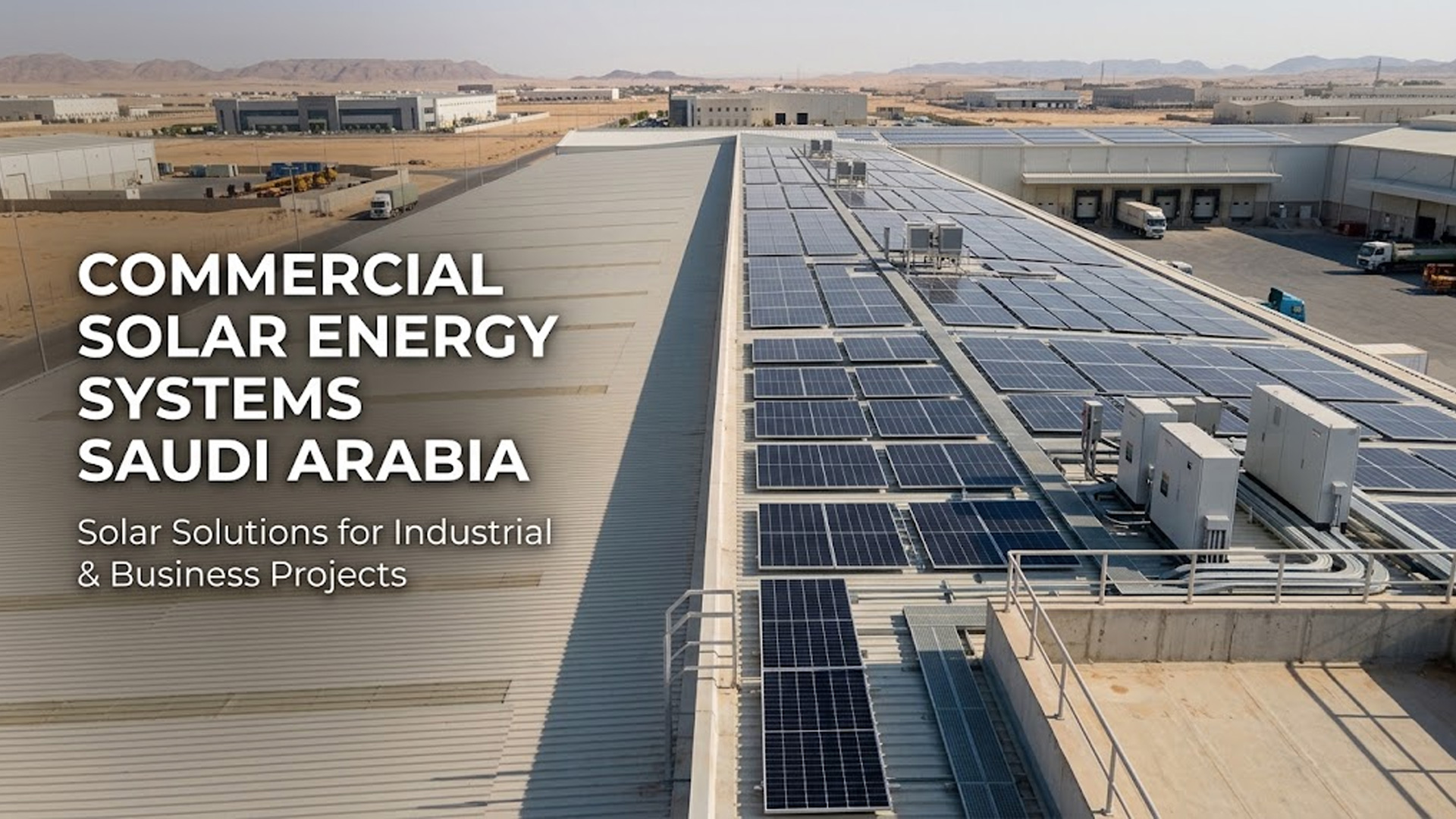
Businesses considering Commercial Solar Energy Systems Saudi Arabia projects often begin by asking how many solar panels can fit on the site.
For commercial and industrial facilities, a more useful starting point is the electricity-load profile.
A factory with heavy daytime machinery, a logistics warehouse, a hotel, an office complex and a retail development can consume electricity very differently throughout the day.
Those differences should influence solar-system capacity, inverter selection, electrical integration and expectations for on-site solar utilisation.
A commercial PV project should therefore be designed around the facility rather than forcing the facility to fit a predetermined solar package.
Start With Electricity Consumption
The first step is understanding how much electricity the facility uses.
Historical electricity consumption can provide useful context, but monthly totals should ideally be supplemented with more detailed load information where available.
Project teams should understand:
- Normal daytime demand
- Peak electrical demand
- Operating hours
- Weekend operation
- Seasonal variation
- Major electrical loads
- Future expansion
These details provide a stronger basis for commercial solar Saudi Arabia system sizing.
Why Daytime Demand Is So Important
Solar PV generates power during daylight hours.
Facilities with substantial daytime electricity consumption can therefore use solar generation directly against active loads.
Examples may include:
- Manufacturing plants
- Warehouses
- Commercial offices
- Retail properties
- Hotels
- Industrial facilities
- Logistics centres
- Workshops
The closer the solar-generation profile aligns with on-site demand, the more useful the system can become within the facility’s broader energy strategy.
Do Not Automatically Install the Maximum Possible Capacity
Available roof or land area may allow a very large PV array, but maximum physical capacity is not necessarily the optimum commercial capacity.
System sizing should also consider:
- Actual electricity demand
- Daytime consumption
- Site constraints
- Electrical infrastructure
- Project objectives
- Expected future loads
A technically balanced system is more important than simply maximising panel count.
Evaluate All Available Installation Areas
A commercial or industrial property may have several potential solar locations.
Rooftops
Factory and warehouse roofs can offer large installation areas where structural and layout conditions are suitable.
Carports
Parking areas can potentially support solar structures while also providing shade below.
Ground-Mounted Areas
Industrial sites with suitable available land may consider ground-mounted arrays.
The best option depends on site layout, electrical routing, structural conditions and maintenance access.
Structural Assessment Should Come Before Rooftop Design Is Finalised
Solar modules, mounting systems and associated loads become part of the building.
Before finalising rooftop capacity, buyers should consider:
- Roof structure
- Roof condition
- Existing mechanical equipment
- Drainage
- Access routes
- Maintenance areas
- Available usable space
The roof drawing may show more space than the solar project can practically use.
Shading Analysis Can Protect System Performance
Nearby structures, walls, rooftop plant and other objects may create shading.
The effect can vary during the day.
A well-developed layout should therefore consider shading before module placement is finalised rather than attempting to fill every available section of roof.
Equipment Should Be Selected for Actual Outdoor Conditions
Solar modules and inverters may operate in demanding outdoor conditions.
Equipment selection should therefore consider environmental exposure, temperature, installation location and ventilation.
Catalogue performance data should be interpreted alongside the actual conditions expected at the project site.
Dust and Cleaning Should Be Part of Ongoing Operations
PV modules operate outdoors and can accumulate dust or other contamination over time.
Commercial projects should consider cleaning access and maintenance during system design.
A sensible plan may review:
- Site environment
- Safe access
- Cleaning frequency
- Module layout
- Water use where applicable
- Inspection procedures
Inverters Are Central to the Solar System
The PV modules generate DC electricity, while the inverter converts that output for use by the facility’s AC electrical system.
Inverter selection should consider:
- Array capacity
- Electrical configuration
- Monitoring
- Installation environment
- Maintenance access
- Future expansion where relevant
Electrical Integration Should Be Planned Early
A solar energy solutions KSA project becomes part of the site’s electrical network.
The design team should therefore understand:
- Main electrical distribution
- Existing connected loads
- Protection
- Cable routing
- Switchgear
- Metering
- Monitoring
- Potential future loads
These considerations are particularly important at industrial facilities where production equipment can create substantial electrical demand.
Commercial Solar and Industrial Expansion Should Be Planned Together
Factories and warehouses often expand over time.
Additional production machinery, cooling systems, pumps or process equipment can increase electricity demand.
A solar system designed without understanding expansion plans may no longer align with the facility’s consumption after those changes occur.
This is why future loads should be discussed even when they are not part of the immediate solar project.
Solar and EV Charging Can Become Part of One Energy Strategy
Commercial properties and fleets planning EV charging can create new daytime or overnight electrical demand.
Solar generation does not automatically eliminate that charging demand, but reviewing both systems together helps the project team understand the complete electrical picture.
RBC Engineering’s existing EV charging systems in Saudi Arabia page provides a natural internal link between the country’s solar and electric-mobility clusters.
Monitoring Turns Solar Into a Managed Asset
A commercial installation should provide useful operational visibility.
Monitoring may allow facility teams to review:
- Current output
- Daily energy production
- Historical generation
- Inverter status
- System alarms
- Performance changes
This makes it easier to identify unusual system behaviour and support routine maintenance.
Maintenance Should Be Designed In From Day One
Commercial solar projects are expected to remain in operation for many years.
Safe access to modules, electrical equipment and inverters should therefore be maintained.
Project layouts should avoid creating unnecessary obstacles for maintenance teams or blocking access to existing rooftop equipment.
Compare Complete Solar Proposals — Not Just Panel Quantity
Two proposals may contain the same number of panels but represent different overall systems.
Buyers should compare:
System Capacity + Design Basis + Module Specification + Inverters + Mounting + DC Scope + AC Scope + Protection + Monitoring + Installation + Documentation + Maintenance Access
The commercial comparison becomes much more meaningful after the technical scope is aligned.
Lifecycle Thinking Improves Solar Procurement
Commercial solar systems should be evaluated as long-term infrastructure.
Important considerations include:
- Equipment reliability
- Monitoring
- Cleaning requirements
- Inspection
- Access
- Replacement components
- Future expansion
What Information Should Saudi Businesses Prepare for a Solar Proposal?
- Project location
- Historical electricity consumption
- Daytime load information where available
- Operating hours
- Major electrical loads
- Roof, carport or land availability
- Electrical-distribution information
- Known shading or site restrictions
- Future expansion plans
- Future EV-charging requirements if relevant
Avoid Generic Solar Packages
Two facilities with the same monthly electricity use can still need different solar systems.
One may operate heavily during daylight hours. Another may consume much of its electricity at night. One may have a large clear roof, while another has extensive mechanical equipment and shading.
That is why commercial solar should be designed for the property rather than selected from a standard capacity package.
Building RBC Engineering’s Saudi Energy Cluster
RBC Engineering supports solar-energy, EV-charging and related engineering requirements for commercial and industrial projects.
The developing Saudi Arabia content cluster connects renewable energy with industrial plant equipment, water treatment, cooling systems and electric-mobility infrastructure.
Businesses researching solar can also review RBC Engineering’s broader commercial solar energy guidance for additional system-planning information.
Frequently Asked Questions
How should a commercial solar system in Saudi Arabia be sized?
Capacity should reflect electricity consumption, daytime load, available installation area, electrical infrastructure and expected future demand.
Is monthly electricity consumption enough to design a commercial solar system?
It provides a useful starting point, but more detailed daytime or interval consumption data can give a clearer picture of how well solar production may align with the facility’s demand.
Can factories use commercial solar systems?
Yes, where site, electrical and operating conditions are suitable. Industrial facilities with significant daytime demand can be particularly relevant candidates for solar evaluation.
Can solar be combined with EV-charging infrastructure?
Both systems can be considered within the same broader electrical strategy. Their capacities and operating profiles should still be assessed separately and then coordinated.
Why should solar proposals include monitoring?
Monitoring provides visibility into generation, system status and potential performance changes, helping facility teams manage the installation over time.
Discuss Your Saudi Commercial Solar Project With RBC Engineering
Share your electricity consumption, operating schedule, site layout, available roof or land area and future electrical requirements with RBC Engineering.
The right commercial solar system is not necessarily the biggest system the site can hold. It is the system designed around how the business actually consumes energy.