

Your Water Treatment Supplier Should Solve the Water Problem — Not Simply Sell You a System
Choosing an Industrial Water Treatment Company UAE project teams can work with confidently is not simply a matter of comparing equipment capacities and quotation totals. Water treatment is closely connected to the actual condition of the incoming water, the quality required after treatment, daily consumption, operating hours, available space and the wider requirements of the facility.
This is where procurement decisions can become difficult. Two suppliers may offer systems with similar stated capacities, yet the treatment process, equipment scope, automation, materials, recovery expectations, maintenance requirements and long-term operating costs can be very different.
For factories, warehouses, hotels, commercial developments, processing facilities and infrastructure projects across the UAE, a better approach is to evaluate the supplier as an engineering partner rather than viewing water-treatment equipment as a standard product.
The right question is not simply, “How much does the system cost?” It is, “Has this system been selected around our actual water conditions and operating requirement?”
What Should an Industrial Water Treatment Company Actually Evaluate?
A professional industrial water treatment UAE project should begin with technical information rather than a pre-selected equipment package.
Before proposing a treatment system, the supplier should understand several fundamentals:
- Where the feed water comes from
- What the available water analysis shows
- How much treated water is required
- What the treated water will be used for
- What final water quality is expected
- How many hours per day the system will operate
- Whether storage is available or required
- How reject or wastewater will be managed
- What level of automation is appropriate
- How the equipment will be accessed for maintenance
Without these details, equipment selection can rely too heavily on assumptions.
RBC Engineering’s industrial water treatment RFQ guide for UAE buyers provides a useful starting point for project teams preparing technical information before approaching suppliers.
Start With Feed-Water Conditions
No treatment process should be selected purely because it is familiar or widely used.
The starting point should be the water itself.
Depending on the application, engineers may need to understand parameters such as salinity, hardness, suspended solids, turbidity, pH, dissolved substances, iron, organic contamination, microbiological concerns or other water-quality characteristics relevant to the project.
The objective is not to test everything without purpose. It is to gather enough reliable information to understand what the system needs to remove, reduce, control or condition.
This matters because different water problems require different treatment processes.
A suspended-solids problem may call for an effective filtration approach. Hardness may require softening. High dissolved salt levels may lead engineers toward membrane treatment or desalination. Certain applications may require disinfection or additional polishing after the principal treatment stage.
Professional water treatment solutions UAE projects should therefore be application-led rather than equipment-led.
Define the Treated-Water Requirement Before Selecting Technology
Knowing what enters the system is only half of the engineering question.
The supplier also needs to understand what must come out of it.
Treated water may be required for industrial processes, manufacturing, washing, cooling, boiler-related applications, commercial building services, irrigation, hospitality operations or another defined purpose.
Each application can have a different water-quality requirement.
A treatment system should therefore be designed backwards from the required result.
For example, installing reverse osmosis simply because the buyer asks for “purified water” may be unnecessary if the real requirement is primarily suspended-solids control. At the same time, conventional filtration may not be enough where the project needs substantial reduction of dissolved salts.
RBC Engineering’s guide to water filtration vs reverse osmosis explains why these technologies should be selected according to the treatment objective rather than treated as interchangeable solutions.
Look Beyond the Main Treatment Unit
One of the easiest procurement mistakes is to compare only the headline equipment.
A water-treatment plant is rarely just one machine.
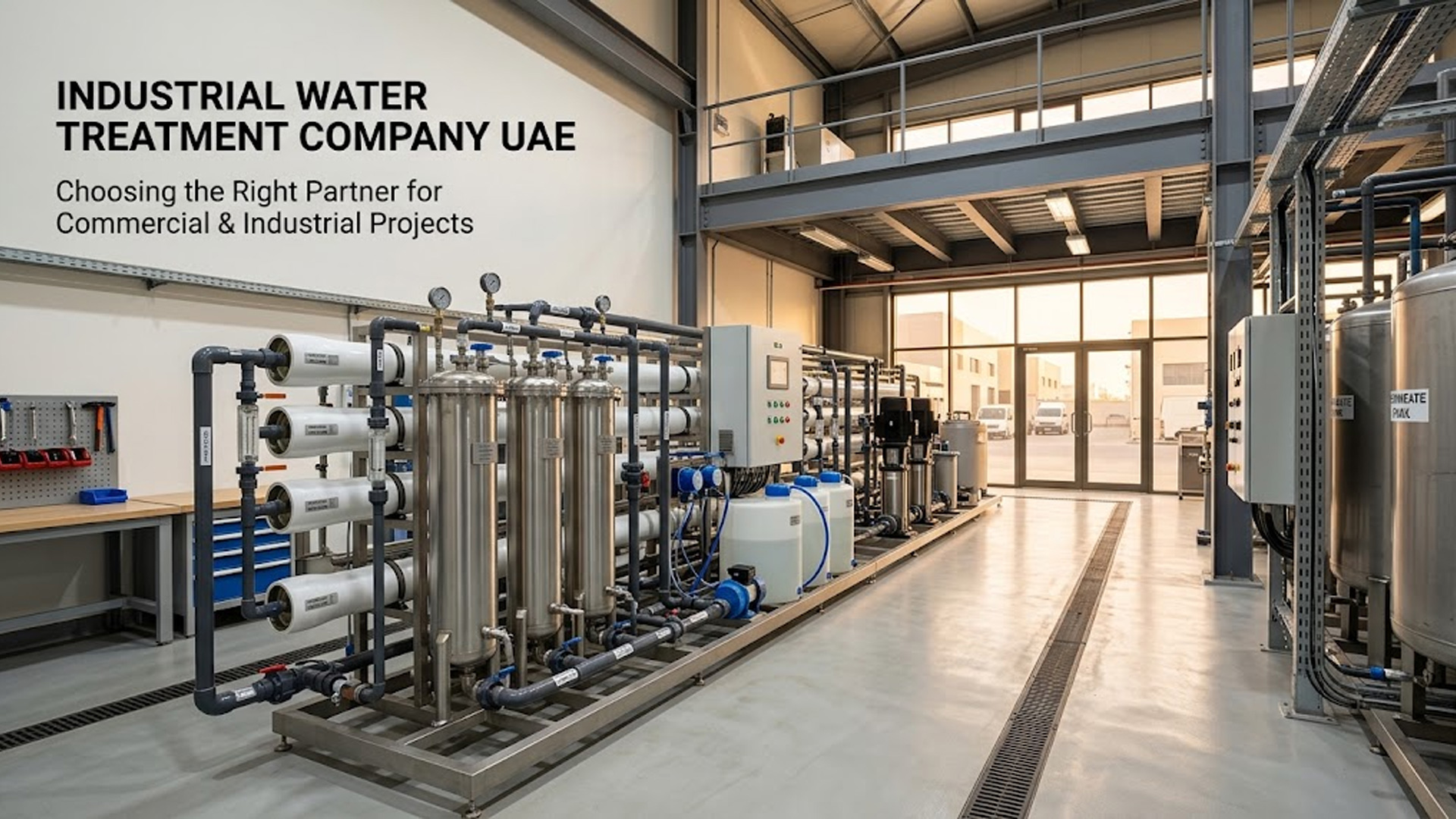
Depending on the project, the complete treatment train can include feed pumps, pretreatment, filters, chemical dosing, membranes, controls, instrumentation, treated-water storage, transfer pumps and reject-water arrangements.
For this reason, a quotation for an RO unit should not automatically be compared with another quotation simply because both show the same nominal production capacity.
The real comparison should examine what is actually included.
Pretreatment
Pretreatment deserves particular attention because downstream treatment performance can depend heavily on the condition of the water entering sensitive equipment.
Depending on feed-water characteristics, pretreatment may include sediment control, multimedia filtration, activated carbon, softening, cartridge filtration or suitable chemical conditioning.
Not every project needs every stage.
The engineering value comes from choosing only the stages that serve a clear purpose.
Pumping and Pressure
Pumps should also be evaluated as part of the process rather than treated as secondary accessories.
Flow requirements, pressure, operating conditions, control method and expected duty all influence pump selection.
Instrumentation and Controls
A system may also require pressure, flow, conductivity, tank-level or other monitoring according to its complexity and operating requirement.
Automation can reduce unnecessary manual intervention, but additional controls should have an operational reason behind them. A complicated control package is not automatically a better control package.
System Capacity Should Match Actual Water Demand
Bigger equipment can appear safer during procurement, but oversizing is not always the best solution.
A properly selected industrial water treatment system UAE project should consider actual consumption rather than relying only on a rough daily estimate.
Useful questions include:
- What is the facility’s normal daily demand?
- Does consumption rise sharply during certain hours?
- How many hours can the treatment plant operate each day?
- How much treated-water storage is available?
- Is standby capacity required?
- Will the facility expand?
- Can production be scheduled around storage?
A plant that runs for fewer hours at a higher output can behave very differently from a continuously operating system, even where both are intended to meet the same daily demand.
Capacity therefore needs to be considered alongside operating strategy.
Ask How Recovery and Reject Water Will Be Managed
Where membrane treatment is involved, project teams should understand that the incoming water does not all become treated product water.
There will normally be a reject stream.
That means a supplier discussion should include expected recovery, feed-water quantity, product-water output and reject-water handling.
The project team should understand where reject water will go and whether any appropriate reuse option is being considered as part of the wider water balance.
This should happen before installation rather than becoming a site problem after commissioning.
Evaluate Materials Against Water Chemistry and Operating Conditions
Material selection should be practical rather than based on the assumption that the most expensive construction is automatically best.
The supplier should consider the water, operating pressure, installation environment and chemical exposure when selecting wetted components.
Depending on the project, this can affect piping, tanks, vessels, pumps, membrane housings, valves and skid construction.
A good water treatment supplier UAE should be able to explain why particular materials have been proposed.
Maintenance Access Is Part of System Design
Water-treatment equipment eventually needs inspection, cleaning, adjustment or replacement of consumable components.
That sounds obvious, but maintenance access can be overlooked when equipment is fitted into a restricted plant room or compact skid.
Before approving a layout, buyers should consider whether technicians can comfortably reach filters, pumps, membranes, valves, dosing equipment, instruments and electrical panels.
Something as simple as insufficient clearance for membrane removal can create unnecessary maintenance difficulties later.
Compare Lifecycle Requirements — Not Only Purchase Price
The initial quotation is only one part of the financial picture.
Operating expenditure can continue throughout the life of the plant.
Depending on the treatment process, ongoing requirements may include electricity, filters, membranes, chemicals, servicing, cleaning, replacement components and labour.
Water losses and recovery performance may also influence operating economics.
A cheaper system with poorly matched components can eventually cost more to operate than a properly sized system with a higher initial price.
Procurement teams should therefore compare lifecycle requirements as well as capital expenditure.
Check Consumables and Spare-Part Planning Early
Consumables should not become an afterthought once the plant is operating.
During procurement, ask which components will require routine replacement and what stock should reasonably be kept available.
Depending on the installation, this might include cartridges, filter media, membranes, seals, valves, pump components, instrumentation items or dosing-related consumables.
The objective is not to store unnecessary inventory. It is to identify operationally important items before an avoidable failure creates extended downtime.
Compare the Complete Technical Scope of Every Quotation
When several proposals are received, create a like-for-like comparison instead of judging them from the final price at the bottom of the quotation.
Compare:
Feed-Water Basis + Output Quality + Capacity + Treatment Stages + Materials + Pumps + Controls + Instrumentation + Storage + Reject Handling + Commissioning + Consumables + Support
Only then does the price comparison become meaningful.
Questions to Ask an Industrial Water Treatment Company in the UAE
Before final approval, project teams should be able to obtain clear answers to practical questions such as:
- What feed-water information was used to select the system?
- What treated-water quality is the system designed to achieve?
- Why has each treatment stage been included?
- What is excluded from the proposal?
- What operating assumptions have been made?
- What are the expected consumables?
- How will routine maintenance be performed?
- What monitoring is included?
- What happens to reject water?
- What site utilities are required?
Clear answers are often more useful than an equipment brochure.
Working With RBC Engineering
RBC Engineering works with commercial and industrial project requirements involving water treatment, purification, filtration, desalination and related engineering equipment.
Rather than starting with a generic package, project teams can discuss the incoming water, expected treated-water quality, required capacity, operating conditions and wider equipment requirements.
You can also review RBC Engineering’s main water treatment equipment solutions and its guide explaining the differences between water treatment, purification and desalination.
Frequently Asked Questions
How do I choose an industrial water treatment company in the UAE?
Start by evaluating whether the supplier asks for feed-water conditions, treated-water requirements, actual demand, operating hours and site limitations before recommending equipment. A strong proposal should explain the treatment process rather than simply list equipment.
Does every industrial water-treatment project need reverse osmosis?
No. RO is useful where the required treatment objective calls for membrane separation of dissolved substances, but other projects may primarily require filtration, softening, disinfection or a combination of technologies.
What information should be included in a water-treatment RFQ?
Include available water analysis, feed-water source, required output quality, daily and peak demand, operating hours, site limitations, electrical information, storage arrangements, required automation and project schedule.
Why should pretreatment be included in the discussion?
Pretreatment helps prepare feed water for downstream processes. The exact stages should be selected according to actual water characteristics and the requirements of the main treatment technology.
Should water-treatment quotations be compared by capacity alone?
No. Similar stated capacities can hide substantial differences in pretreatment, materials, pumping, controls, instrumentation, storage, reject handling, commissioning and ongoing operating requirements.
Discuss Your UAE Water Treatment Project With RBC Engineering
If you are planning a commercial or industrial water-treatment project, share your feed-water information, required treated-water quality, expected demand, operating schedule and project requirements with RBC Engineering.
A technically useful discussion starts with understanding the water problem first — and selecting the equipment second.