

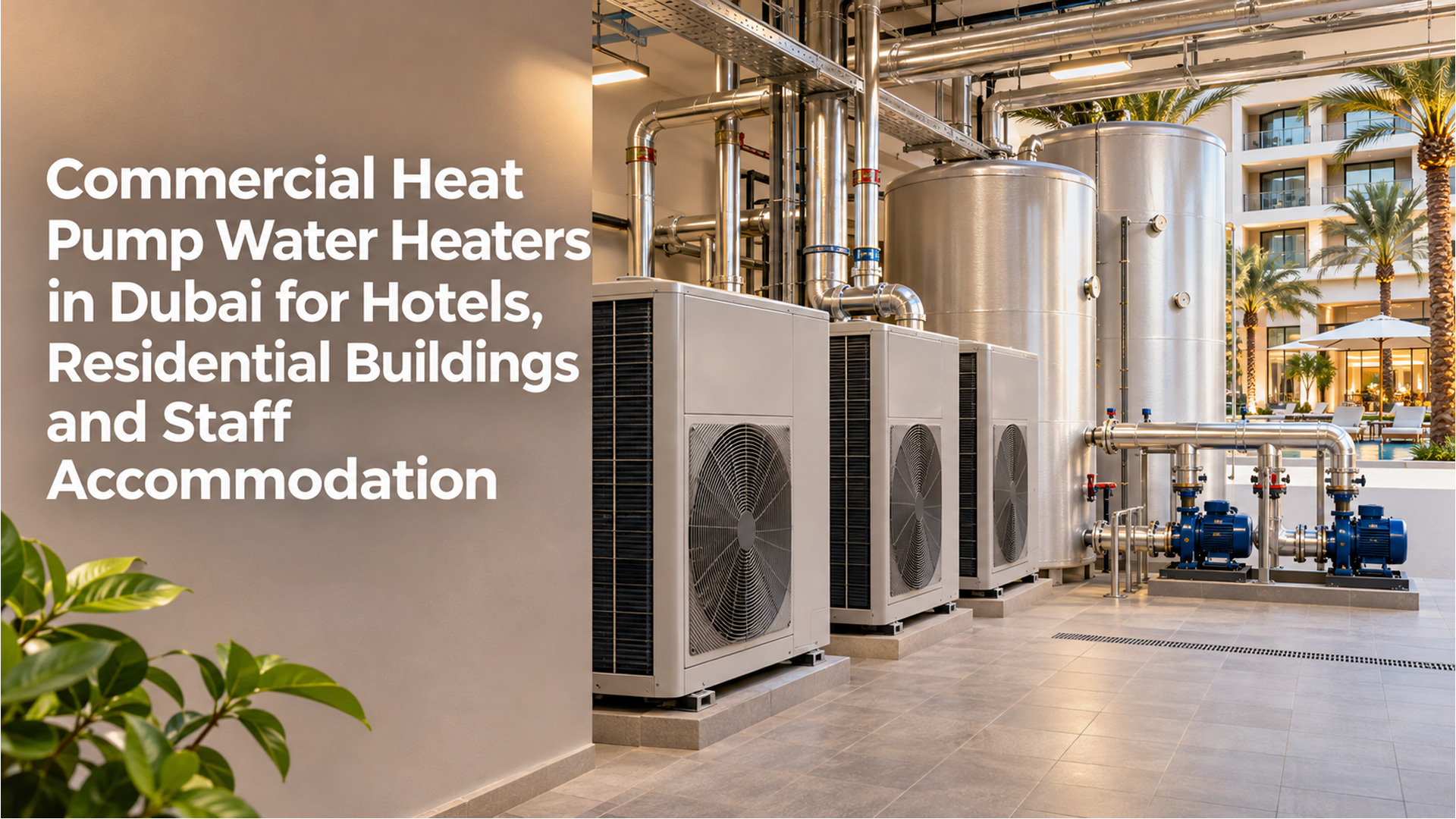
♨️ Hot water is a year-round load in Dubai. A correctly sized heat pump system can deliver it with far less electricity than direct electric heating.
For hotels, residential towers, hospitals, gyms and staff accommodation, domestic hot water runs every day of the year. Many buildings still rely on direct electric heaters or older central systems that convert one unit of electricity into roughly one unit of heat. A commercial heat pump water heater in Dubai works differently: it moves heat from the surrounding air into the water, so it can deliver several units of heat for each unit of electricity consumed.
That efficiency is attractive, but it only shows up in the bills when the system is sized for the building’s real draw pattern, paired with enough storage, and installed where it can breathe. This guide explains how commercial heat pumps work, where they fit, and what to check before you buy.
Direct answer: A commercial heat pump water heater extracts heat from ambient air and transfers it to water using a refrigeration cycle, typically using a fraction of the electricity of direct electric heating. Selection should be based on daily hot-water demand, peak draw periods, required delivery temperature, storage volume, available outdoor space and airflow, water quality and Legionella control. Dubai’s warm climate favors air-source heat pumps, but correct sizing and storage decide real performance.
How a Heat Pump Water Heater Works
A heat pump uses the same principle as an air conditioner in reverse. A fan draws outdoor air across an evaporator, where refrigerant absorbs heat. The compressor raises the refrigerant’s temperature and pressure, and a condenser transfers that heat into the water. The ratio of heat delivered to electricity consumed is called the coefficient of performance (COP).
COP rises when the air source is warm and falls when the required water temperature is high. Dubai’s warm ambient conditions for most of the year are favorable for air-source units, which is one reason they are increasingly considered for commercial buildings.
Heat Pump, Hybrid and Conventional Heaters Compared
| System type | How it heats | Typical use |
| Direct electric heater | Resistance element, about one unit of heat per unit of electricity | Small loads, point-of-use, backup |
| Air-source heat pump | Refrigeration cycle moves heat from air to water | Central hot water for medium and large buildings |
| Commercial hybrid water heater | Heat pump combined with an electric or other backup element | Buildings needing guaranteed recovery at peak times |
| Heat recovery from chillers | Captures rejected heat from cooling plant | Sites with simultaneous cooling and hot-water demand |
| Solar thermal with backup | Solar collectors preheat water | Sites with roof space and steady daytime demand |
A commercial hybrid water heater pairs the heat pump with a backup heater. The heat pump handles most of the load efficiently, while the backup provides fast recovery during unusual peaks or maintenance periods.
Sizing Starts With the Draw Profile
Undersized systems run out of hot water at peak times. Oversized systems cost more and may cycle inefficiently. The design should start from:
- Number of rooms, residents or users
- Fixtures served, such as showers, basins, kitchens and laundries
- Peak demand periods, for example morning and evening in hotels and accommodation
- Required delivery and storage temperatures
- Existing consumption data, if the building is already operating
Storage is the partner of the heat pump. Because heat pumps recover more slowly than large electric elements, storage tanks absorb peak draws while the heat pump reheats steadily. Getting the balance between heat pump capacity and storage volume right is the single most important design decision.
Key insight: Size the heat pump for the daily energy, and size the storage for the peak hour. Treating them as one decision usually leads to either cold showers or wasted capital.
Installation Considerations in Dubai
Airflow and location
Air-source heat pumps need free airflow. Roof plant areas, podium levels or well-ventilated courtyards are typical locations. Units placed in enclosed spaces can recirculate cold discharge air and lose efficiency.
Heat and dust
High summer temperatures generally help heat pump efficiency, but units should be rated for the ambient conditions on site. Dust can clog evaporator coils, so access for coil cleaning should be planned.
Water quality
Scale on heat exchanger surfaces reduces efficiency over time. Where water hardness is a concern, suitable water treatment equipment can protect the system. Corrosion protection for tanks, such as anodes or appropriate linings, should also be checked.
Legionella control
Hot-water systems need storage and distribution temperatures, circulation and periodic thermal disinfection that manage Legionella risk. Confirm that the heat pump and backup arrangement can reach the temperatures required by the building’s water hygiene plan.
Heat Recovery and Combined Approaches
Some buildings can recover heat that would otherwise be rejected. Hotels and hospitals with chilled water plants may capture condenser heat to preheat domestic water, reducing load on the heat pump. Others combine heat pumps with rooftop solar energy systems or hybrid solar systems to offset daytime electricity use. These options depend on the building’s existing plant and should be assessed together.
For a broader overview of hot-water options for commercial sites, see our guide to commercial water heating systems in Dubai.
Where Commercial Heat Pumps Fit Best
- Hotels and serviced apartments with high, predictable daily hot-water use
- Residential buildings with central hot-water plants
- Staff accommodation where showers create sharp morning and evening peaks
- Gyms, clubs and sports facilities with heavy shower use
- Hospitals and clinics with continuous demand and strict hygiene requirements
- Commercial kitchens and laundries, where process temperatures are within the heat pump’s range
Key insight: Heat pumps deliver the best savings where hot-water use is high and steady. Buildings with very low or occasional demand may see a longer payback, so the business case should be calculated from actual consumption.
Common Mistakes When Specifying Heat Pump Water Heaters
- Selecting by heating capacity alone without checking storage volume
- Ignoring delivery temperature requirements for kitchens or hygiene
- Installing units where airflow is restricted
- Omitting backup heating for peak or maintenance periods
- Overlooking water hardness and scale on heat exchangers
- Not planning access for coil cleaning and servicing
How RBC Engineering Supports Water Heating Projects
RBC Engineering supplies water cooling and heating equipment, including water heaters, storage and heat exchangers, for commercial and industrial facilities in Dubai and the UAE. For a heat pump enquiry, share the building type, occupancy, fixtures, current hot-water system, consumption data if available, plant location and power supply. Buildings that also operate chilled water plants can discuss heat recovery alongside chiller unit supply and energy-efficient chiller systems.
Frequently Asked Questions
How much electricity can a heat pump water heater save?
Savings depend on COP, operating temperature, usage and the system being replaced. Compared with direct electric heating, heat pumps typically use substantially less electricity for the same hot water, but the exact figure should be calculated for the building.
Do heat pumps work well in Dubai’s climate?
Generally yes. Warm ambient air supports good efficiency for most of the year. Units should be rated for local ambient conditions and installed with good airflow.
What is a commercial hybrid water heater?
It combines a heat pump with a backup heating element or other heat source. The heat pump covers most of the load efficiently, and the backup ensures fast recovery during peaks.
Do heat pumps need large storage tanks?
They usually need more storage than direct electric systems because they recover more slowly. Correct storage sizing allows a smaller, more efficient heat pump to meet peak demand.
Can a heat pump reach temperatures for Legionella control?
Many commercial units can reach suitable storage temperatures, sometimes with backup heating for periodic thermal disinfection. Confirm this against the building’s water hygiene requirements.
Can existing tanks be reused?
Sometimes. Existing tanks may be reused if their condition, capacity and connections suit the heat pump design. An assessment of the existing system is needed.
Make Hot Water a Lower-Cost Utility
A well-designed heat pump water heater in the UAE can turn one of a building’s constant energy loads into a much smaller one. Start with the draw profile, pair the heat pump with the right storage, keep the air flowing and the water clean, and the savings have a fair chance of matching the brochure.
Planning a hot-water upgrade for a hotel, residential building or accommodation in Dubai? Call RBC Engineering on +971 55 502 2471, email info@rbcengineering.ae, or share your building details to discuss heat pump options.