

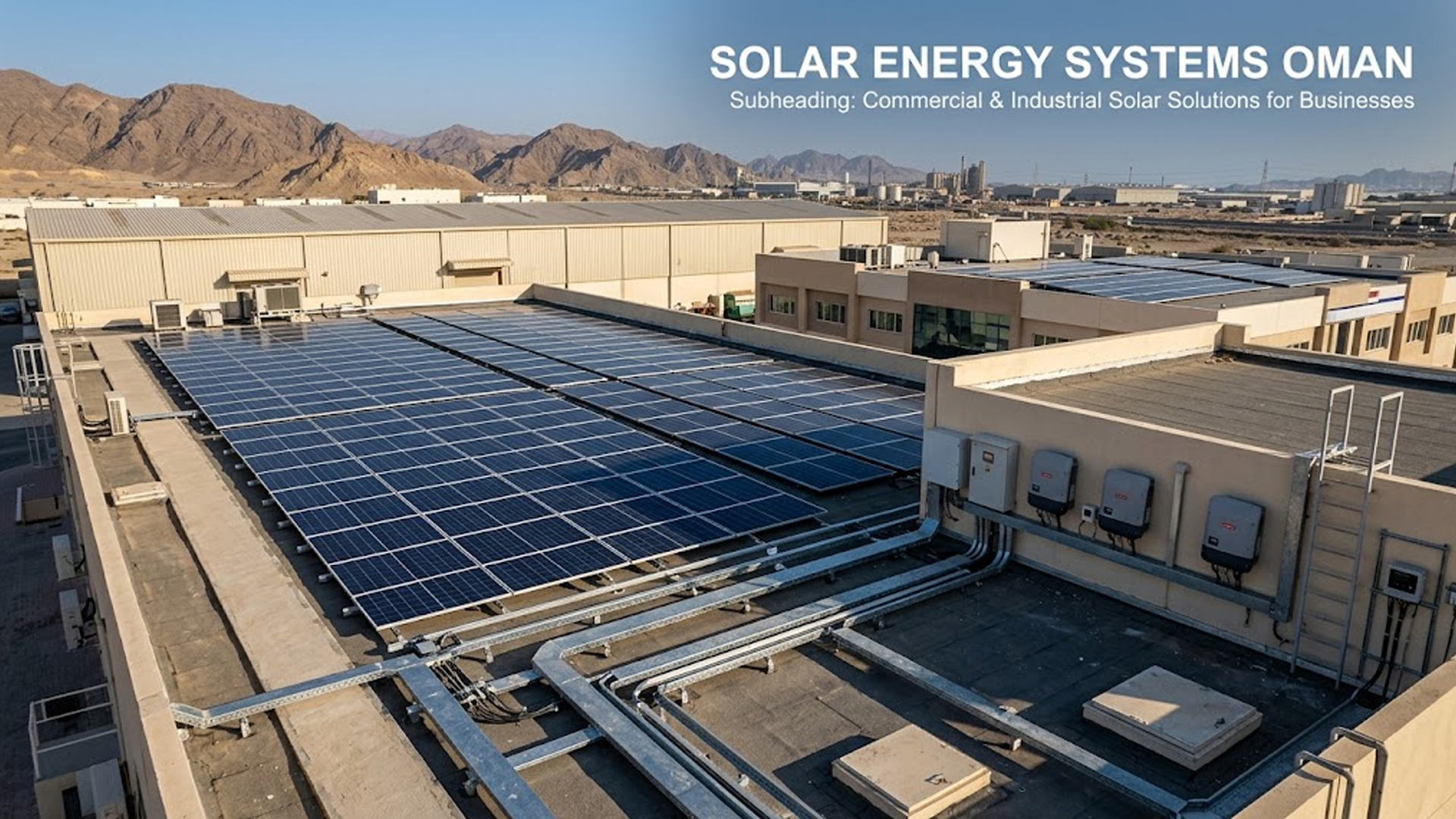
A Good Solar Project Starts With Your Electricity Use — Not With the Maximum Number of Panels That Fit on the Roof
Businesses researching Solar Energy Systems Oman often begin with a simple question: how much solar capacity can be installed at the site?
That is useful, but it should not be the first question.
The stronger starting point is understanding how the facility actually uses electricity throughout the working day.
A warehouse, hotel, commercial building, manufacturing facility and industrial plant can have very different load profiles even when their total monthly electricity consumption appears similar. Solar-system design should therefore consider when electricity is consumed, which loads operate during daylight hours, how much usable installation area is available and how the system will integrate with the existing electrical infrastructure.
For commercial and industrial projects, the objective is not simply to install more panels. It is to design a solar-energy system that fits the site, the load and the long-term operating plan.
Why the Daytime Load Profile Matters
Solar generation takes place during daylight hours, which makes the timing of electricity consumption especially important.
Facilities with substantial daytime demand can often align naturally with solar production.
Examples may include:
- Factories operating daytime production shifts
- Warehouses with cooling, lighting and handling equipment
- Commercial offices
- Retail facilities
- Hotels
- Workshops
- Industrial plants
- Logistics facilities
A monthly electricity bill alone does not show how these loads behave throughout the day.
Where possible, project teams should review consumption patterns in more detail before selecting system capacity.
Do Not Size Commercial Solar From Roof Area Alone
Available roof area is important, but it should not become the sole basis for sizing a commercial solar system Oman project.
A large roof may physically accommodate substantial PV capacity, but that does not automatically mean the facility needs all of it.
The system should be evaluated against:
- Current electrical demand
- Daytime consumption
- Future load growth
- Available installation area
- Shading
- Electrical infrastructure
- Operating schedule
- Project objectives
The most technically useful design balances available generation potential with realistic energy consumption.
Roof, Ground and Carport Solar Can Serve Different Sites
Commercial solar does not have to mean rooftop solar only.
Depending on the property and project layout, possible configurations may include:
Rooftop Solar
Suitable commercial and industrial roofs may provide useful space for PV modules without consuming additional land.
Ground-Mounted Solar
Sites with available land may consider ground-mounted systems where appropriate.
Solar Carports
Car parking areas can sometimes provide another location for solar structures while creating shaded parking below.
The best arrangement depends on available space, structure, electrical routing and project requirements.
Structural Suitability Should Be Checked Before Rooftop Installation
A roof may look ideal from ground level but still require technical assessment before solar installation.
Project teams should consider:
- Roof condition
- Available area
- Existing rooftop equipment
- Access routes
- Structural loading
- Drainage
- Maintenance access
- Shading
Air-conditioning equipment, vents, roof access points and other services can reduce usable PV area.
Maintenance teams should also retain practical access after the solar system is installed.
Shading Can Reduce More Than Just Panel Area
Shading should be evaluated carefully during solar planning.
Potential sources can include:
- Nearby buildings
- Parapet walls
- Mechanical equipment
- Communication structures
- Trees
- Other rooftop obstructions
Some shading may occur only during particular hours or seasons.
The layout should therefore be developed around real site conditions rather than assuming every available square metre performs equally.
High Temperatures Should Be Considered in Solar Design
Solar modules generate electricity from sunlight, but module operating temperature can also affect performance.
Commercial solar design in Oman should therefore account for the actual outdoor environment in which the equipment will operate.
Suitable ventilation around modules, equipment location and component selection all form part of practical system design.
The system should be evaluated for real site conditions rather than relying only on ideal laboratory ratings.
Dust and Soiling Should Be Included in the Maintenance Plan
Commercial and industrial solar installations operate outdoors for years.
Dust and other surface contamination can reduce the amount of sunlight reaching the modules.
For this reason, cleaning should not be treated as an occasional afterthought.
A practical solar energy solutions Oman plan should consider:
- Site environment
- Module accessibility
- Safe cleaning access
- Cleaning frequency
- Water availability where relevant
- Inspection procedures
The ideal maintenance approach depends on actual site conditions.
Solar Panels Are Only One Part of the System
A commercial PV system includes more than modules.
Depending on the design, the complete installation may involve:
- PV modules
- Inverters
- Mounting structures
- DC cabling
- AC cabling
- Electrical protection
- Distribution interfaces
- Monitoring
- Earthing
- Isolation equipment
Buyers should compare the complete system scope rather than focusing only on panel brand or installed kilowatts.
Inverter Selection Deserves Attention
The inverter converts electricity generated by the solar modules into usable AC power for the facility.
Its capacity, configuration, monitoring functions and relationship with the PV array should be evaluated as part of the overall design.
Project teams should also consider where inverters will be installed and whether the proposed location provides suitable environmental conditions and maintenance access.
Solar Should Be Integrated With the Existing Electrical System
Commercial solar should not be treated as an isolated rooftop installation.
It becomes part of the facility’s electrical infrastructure.
Design teams may therefore need to understand:
- Existing connected load
- Main distribution arrangement
- Transformer capacity where relevant
- Protection requirements
- Cable routes
- Metering
- Monitoring
- Future electrical expansion
This becomes increasingly important for facilities adding other substantial electrical loads.
Solar and EV Charging Can Be Planned Together
Businesses considering future electric-vehicle charging may benefit from reviewing solar and charging requirements together.
EV chargers can add new electrical demand to commercial properties, hotels, industrial facilities and fleet locations.
Solar generation and EV charging do not automatically balance each other, but understanding both projects early allows the wider electrical strategy to be planned more effectively.
RBC Engineering already provides information about EV charging systems in Oman, creating a natural connection between the country’s commercial solar and EV infrastructure requirements.
Future Expansion Should Be Considered During Initial Design
A business may install solar today and expand its operations later.
Additional production lines, warehouse space, cooling equipment or EV chargers may increase electrical consumption.
The initial project should therefore consider whether future system expansion is likely.
This does not mean installing unnecessary capacity immediately.
It means understanding potential future requirements while decisions about equipment layout, electrical interfaces and usable space are still being made.
Monitoring Helps Businesses Understand Real Performance
Commercial solar systems should provide useful visibility into operation.
Depending on the installation, monitoring may help users track:
- Current power generation
- Daily energy production
- Historical generation
- System status
- Inverter status
- Fault notifications
Monitoring can help identify unusual changes in performance rather than waiting for them to appear indirectly through electricity consumption.
Maintenance Access Should Be Designed Into the Layout
PV modules, inverters and electrical components require inspection during their operating life.
The installation should therefore allow safe access to equipment without unnecessarily removing other components.
Roof layouts should preserve appropriate pathways and access to unrelated building services where required.
Compare Commercial Solar Proposals Beyond Price Per Kilowatt
Two solar proposals with the same headline system capacity may differ significantly.
When comparing proposals, review:
System Capacity + Expected Generation Basis + Module Specification + Inverters + Mounting + Electrical Scope + Protection + Monitoring + Installation Requirements + Maintenance Access + Documentation
The cheapest cost per installed kilowatt does not automatically represent the best overall project value.
Prepare Better Information Before Requesting a Solar Proposal
Useful project information may include:
- Project location
- Recent electricity consumption
- Available interval or daytime-load information where possible
- Operating hours
- Roof, land or carport availability
- Existing electrical information
- Major connected equipment
- Known future load expansion
- Project objectives
Working With RBC Engineering on Oman Solar Projects
RBC Engineering supports commercial and industrial energy requirements across solar-energy systems, EV charging and related engineering solutions.
For an Oman solar project, the useful starting point is to share the facility’s electricity profile, operating schedule, available installation space and future electrical plans.
Businesses evaluating wider renewable-energy options can also review RBC Engineering’s solar energy solutions content for additional technical context.
Frequently Asked Questions
How should a commercial solar system in Oman be sized?
System capacity should consider the facility’s electricity demand, daytime load profile, available installation area, shading, electrical infrastructure and future load requirements.
Is a large roof enough to justify a large solar installation?
Not necessarily. Available space is only one design factor. Electricity consumption and the timing of that consumption should also influence system capacity.
Can commercial solar be installed on car parking areas?
Solar carports may be an option where the site layout and project requirements make them practical. Structural, electrical and access considerations still need to be evaluated.
Why does solar monitoring matter?
Monitoring gives the facility visibility into energy generation, system status and potential performance issues.
Should EV charging be considered when planning commercial solar?
Where a business expects to add EV charging, reviewing the two requirements together can improve overall electrical planning and help account for future load growth.
Discuss Your Oman Commercial Solar Project With RBC Engineering
If your business is considering solar for a factory, warehouse, commercial building, hotel or industrial site, share your electricity consumption, operating hours and available installation area with RBC Engineering.
A strong commercial solar project starts with understanding where and when your business uses electricity — then designing generation around that reality.