

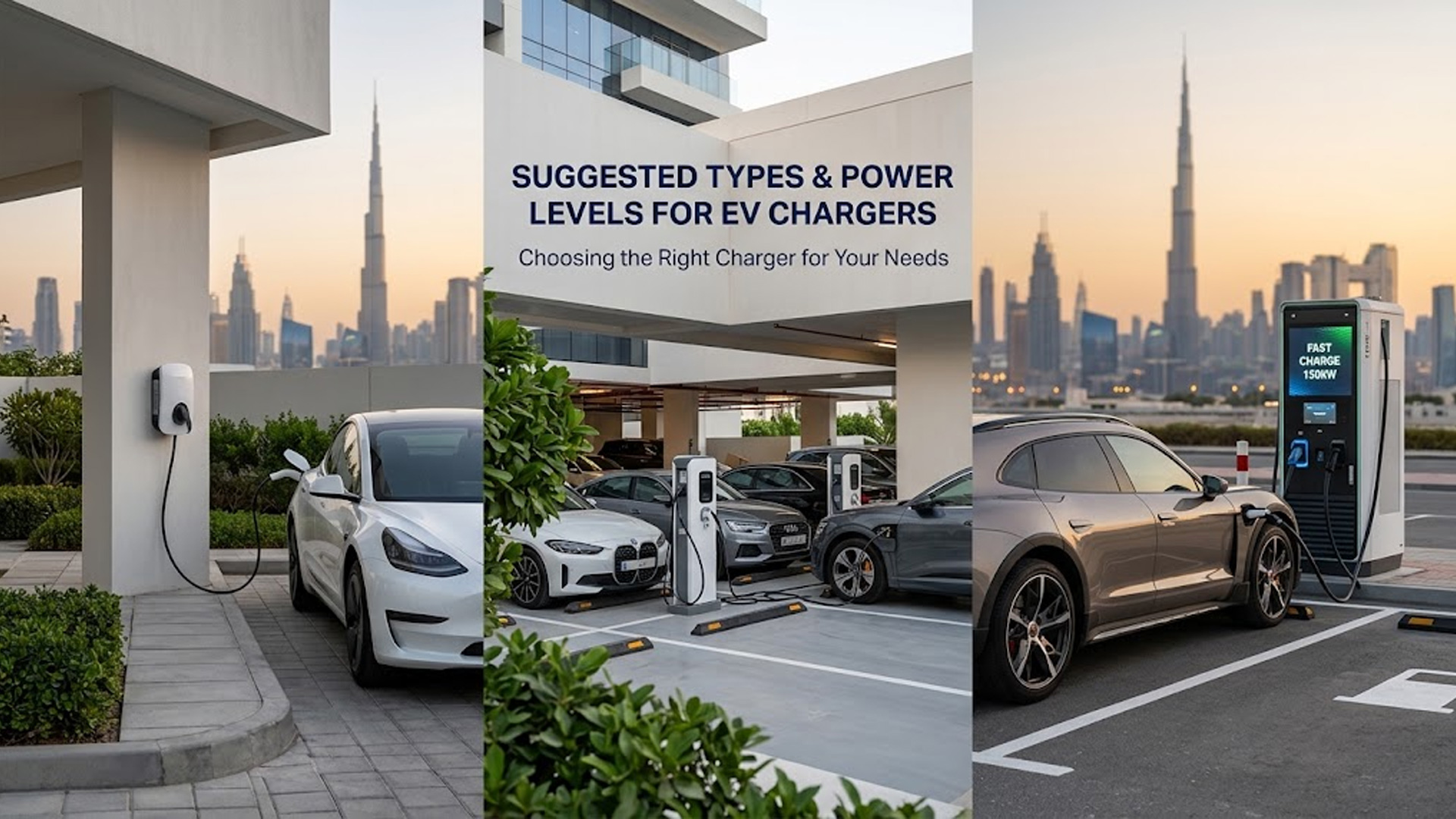
Understanding EV Chargers: What Power Level Do You Need?
Electric vehicles (EVs) are becoming the future of transportation, and with this shift, choosing the right EV charger is more important than ever. Whether for personal use at home, commercial parking lots, or business fleets, selecting the right type and power level of an EV charger impacts charging speed, convenience, and overall efficiency.
At RBC Engineering, we specialize in providing EV charging solutions that cater to different needs, ensuring that your vehicle is charged safely and efficiently. In this guide, we’ll walk you through the various types of EV chargers, their power levels, and how to choose the best option based on your charging requirements.
- Why EV Charger Power Levels Matter
The power level of an EV charger determines how fast your vehicle will charge. Choosing the right charger depends on factors like:
✅ Daily driving distance – Do you need a full charge overnight, or is slow charging sufficient?
✅ Type of EV – Some EVs support faster charging speeds than others.
✅ Availability of power supply – Can your home or business support high-powered chargers?
✅ Charging location – Home, office, or public charging stations have different power needs.
By understanding power levels and charger types, you can make an informed decision that suits your budget, convenience, and energy consumption.
- Types of EV Chargers: Which One is Right for You?
EV chargers are categorized into three levels based on their power output and charging speed.
🔹 Level 1 Chargers (Slow Charging – 2kW to 3kW)
Best for: Occasional charging, emergency use, and low-mileage drivers.
- Uses a standard household power outlet (230V in the UAE).
- Charging Time: 24+ hours for a full charge (depends on battery size).
- Pros: No installation required, plug-and-play.
- Cons: Extremely slow, not ideal for daily charging.
💡 Who should use this?
If you drive short distances and don’t need frequent fast charging, Level 1 chargers can work as a backup option.
🔹 Level 2 Chargers (Fast Home & Public Charging – 7kW to 22kW)
Best for: Homeowners, businesses, and workplaces looking for faster charging.
- Requires a dedicated charging unit and professional installation.
- Charging Time: 2 to 8 hours for a full charge, depending on the power level.
- Pros: Much faster than Level 1, cost-effective, suitable for daily use.
- Cons: Requires installation and electrical upgrades in some cases.
Who should use this?
- Homeowners who want overnight charging.
- Apartment buildings & offices looking to provide charging stations.
- Businesses with company EV fleets.
Common Power Levels for Level 2 Chargers:
✅ 7kW chargers – Ideal for home use, charges most EVs in 6-8 hours.
✅ 11kW chargers – Faster charging for homes and businesses with higher power capacity.
✅ 22kW chargers – Best for commercial parking lots and businesses with frequent EV users.
DC Fast Chargers (Ultra-Fast Public Charging – 50kW to 350kW)
Best for: Public charging stations, taxi fleets, and high-traffic locations.
- Uses direct current (DC) to charge EVs rapidly.
- Charging Time: 30 to 60 minutes for 80% charge.
- Pros: Super-fast charging, ideal for public and commercial use.
- Cons: Expensive to install, requires high-power electrical infrastructure.
💡 Who should use this?
- Businesses with high EV traffic (taxi services, delivery fleets).
- Public charging stations along highways and busy areas.
- EV owners who need quick top-ups while traveling.
Common Power Levels for DC Fast Chargers:
✅ 50kW chargers – Entry-level fast charging, commonly used in urban areas.
✅ 100kW-150kW chargers – Mid-range for busy charging hubs.
✅ 350kW ultra-fast chargers – Future-ready, high-power chargers for the latest EVs.
- Choosing the Right EV Charger Based on Your Needs
Now that you know the different types and power levels of EV chargers, here’s how to choose the best one for your needs:
| Charging Need | Recommended Charger | Power Level | Charging Speed |
| Home charging (overnight) | Level 2 Charger | 7kW – 22kW | Full charge in 6-8 hours |
| Apartment parking | Level 2 Charger | 11kW – 22kW | Best for shared use |
| Public fast charging | DC Fast Charger | 50kW – 150kW | 80% charge in 30-45 mins |
| Taxi & commercial fleets | High-power DC charger | 100kW – 350kW | Fast charging for multiple vehicles |
Why Invest in the Right EV Charger?
Choosing the right EV charger type and power level is crucial for efficiency, cost savings, and convenience. Here’s why it matters:
🔹 Saves Time: Faster charging means less waiting and more driving.
🔹 Reduces Energy Costs: Using the right charger can optimize electricity use.
🔹 Extends Battery Life: Proper charging speeds prevent battery degradation.
🔹 Future-Proof Investment: Upgrading now ensures compatibility with new EV models.
At RBC Engineering, we offer premium EV charging solutions in Dubai, UAE, tailored to your home, business, or public charging needs.
- Get Expert Guidance for EV Charging Solutions
If you’re unsure which EV charger type or power level is best for you, our team at RBC Engineering can help! We provide:
✅ Expert consultation on charger selection.
✅ Professional installation for homes, businesses, and public spaces.
✅ High-quality EV chargers with smart features and energy efficiency.
✅ Maintenance & support to keep your chargers running smoothly.
📞 Call Us: +971 555 022 471
📩 Email Us: info@rbcengineering.ae
🌐 Visit Our Website: RBC Engineering – EV Charging Solutions